Because There Is No
Substitute for Experience,
Knowledge & Advocacy
Substitute for Experience,
Knowledge & Advocacy







As one of a handful of lawyers with real and practical experience shutting down same-sex blackmailers targeting both closeted and out gay and bi-sexual men, whether first contact was in person or an app/website – Tinder, Grndr, Scruff, Sniffies, BedPage, Seeking, Hinge, Hornet, among many others, the consequences of these extortions are as frightening as they are real. For a professional individual, executive, physician, lawyer, entrepreneur, entertainer, athlete, or any other public-facing professional, LGBTQ+ sextortion is not merely an embarrassing online episode. It is a threat to privacy, family stability, business relationships, public reputation, and personal control. When the scam begins on a same-sex or LGBTQ+ dating app, the pressure can feel even more invasive because the extortionist is often weaponizing deeply personal information, intimate communications, sexual contact, perceived vulnerability, and the fear of exposure where you are not open and public with your sexuality and/or you are in an otherwise committed relationship or marriage.
That is why many victims – you – are not looking for a slow-moving public process. You are not interested in becoming part of a spectacle. You are not trying to educate the scammer, argue on the app, or spend weeks letting events spiral while strangers gain leverage over their private lives. You want the threat contained. You want the damage minimized. You need the situation handled strategically, discreetly, and fast.
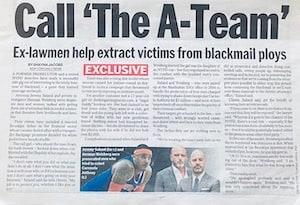
Saland Law approaches these cases with that reality in mind. Jeremy Saland, a former Manhattan prosecutor who was the lead attorney on the arrest, indictment and conviction of multiple men who extorted a then-NBA All Star, and New York criminal defense lawyer, understands how pressure campaigns unfold, how bad actors use fear to create compliance, and how important it is to take control before the extortionist expands the circle of harm. In many of these matters, the real priority is not punishing the scammer or even arresting him or her. The priority is shutting the threat down before it reaches a spouse, employer, board, client base, newsroom, social media audience, or family member, and making it overwhelmingly clear to the sextortionist that something wicked this way comes for him or her within the four corners of the law if he or she continues their predatory attack on you. Jeremy has protected countless men before and he can do the same for you.


Sextortion is always invasive, but LGBTQ+ sextortion often comes with a sharper and more personal set of pressure points when you are not open or public about your sexual identity or orientation. The extortionist may threaten to disclose private details about sexual orientation, gender identity, intimate interests, same-sex dating activity, or app usage to people who have no business receiving that information. In other cases, the threat is framed around exposing private photos, video calls, flirtatious messages, discussions of sexual contact, or conversations that the victim believed would remain confidential.
For some victims, the blackmailer is trying to exploit the fear of being outed. For others, the victim is already openly LGBTQ+, but the real concern is different. It may be marriage, children, investors, campaign staff, hospital administrators, licensing boards, religious communities, or a carefully maintained public image, and other issues regardless of one’s identity or orientation. You can be secure in who you are and still be legitimately terrified of how a malicious stranger intends to weaponize intimate content.
That is one reason these cases cannot be treated as routine online scams. The emotional stakes are high, but so are the practical consequences. Once an extortionist identifies a victim as someone with money, visibility, or something to lose, the threat often escalates quickly. A sloppy response can make things worse. A panicked payment can invite more demands. A reactive argument can give the extortionist more material to use.
Jeremy Saland’s role in these matters is to cut through the panic, assess the threat with discipline, change the power dynamic, and help position the victim to regain control in order to shut down your abuser.
Many LGBTQ+ sextortion cases begin on legitimate platforms used by people seeking dating, companionship, community, or private connection. These may include Grindr, SCRUFF, HER, Taimi, Lex, Archer, and other LGBTQ+ focused apps or spaces. Sometimes the relationships, whether long term or transactional, are born from sites such as Seeking, BedPage or those specifically catering to escorts, prostitutes, hookups or other sexual interactions. The fact that these are real platforms is precisely what makes them useful to scammers. They can build profiles that look plausible, attractive, and familiar. They can mirror the language, tone, and pacing of real users. They can exploit the expectation of discretion that often draws people to these spaces in the first place. In the end, the person on the other side of your phone or computer may even be a different gender and person all together, and on the other side of the world.
Some of these cases also arise out of sugarbaby and sugardaddy relationships, “pay to play” arrangements, and other financially driven online interactions that blur the line between dating, companionship, and transactional intimacy. In those situations, the extortionist may use the promise of discretion, gifts, financial support, travel, or exclusive access to draw the victim in before shifting the conversation toward sexual content, private images, or compromising messages. Once that material is obtained, the scammer may threaten exposure not only of the intimate communications themselves, but also of the underlying arrangement.
The sextortionist does not need a perfect profile. It only needs to work long enough to move the conversation into a more vulnerable setting. That may be text messaging, easily deleted or disappearing-message apps like Signal, WhatsAp, or Telegram, email, private video, or direct image exchange. Once that shift happens, the scammer’s objective becomes much clearer. Gather enough personal content, enough identifying information, and enough emotional leverage to force the victim – you – into a corner.
The victim may realize too late that the profile photos were fake, the personal details were scripted, and the emotional chemistry was manufactured. By then, the extortionist is no longer pretending to flirt. The tone changes. The warmth disappears. The threats begin.
Most same-sex dating app sextortion schemes move fast. The scammer wants immediate intimacy and immediate vulnerability. The conversation may become sexual very quickly. There may be requests for live photos, explicit images, a video chat, or a conversation that becomes intensely personal in a short period of time.
As mentioned, and you may know, in some matters, the initial contact is framed as a sugarbaby or sugardaddy relationship, or as a “pay to play” arrangement in which financial assistance, gifts, or lifestyle benefits are tied to flirtation, companionship, or sexual access. These relationships can make you especially vulnerable because the extortionist will later threaten to expose not just explicit content, but the existence of a transactional relationship that will be humiliating , professionally destructive , and deeply disruptive at home.
That speed is not accidental. The extortionist is trying to create a false sense of trust before you have time to pause and evaluate what is really happening. In other words, you are in way too deep. Once you share enough, the scam turns.
The message might say the images will be sent to your spouse, your assistant, your investors, your firm, your law partners, your children, or your social media followers. It may threaten to expose your sexuality, your dating life, your private interests, or your presence on LGBTQ+ dating apps. It may promise to send screenshots to your employer or professional contacts.
The point is not truth. The point is panic.
Many extortionists do not begin with a huge demand. They start with an amount that feels painful but possible. They want you to think about immediate containment, not long-term consequences. The blackmailer wants compliance before you have the time to speak with counsel, assess the scammer’s actual capabilities, or develop a plan. They coerce you into believing that if you pay now, you’re safe. If not then, you undoubtedly know now this is far from the truth.
That first demand is rarely the end. Once you pay, yoursextortionist has proof that fear works. The pressure grows, not shrinks. The demand can expand from money to more images, more video, more messages, or some other humiliating act meant to deepen the victim’s vulnerability. Alternatively, the demand is more money, faster payment and larger amounts.
Jeremy Saland understands that one of the first things many victims need is “permission” to stop reacting to every incoming threat as though it must be answered in real time. The extortionist wants frantic decision-making. Jeremy’s job is to replace that panic with strategy, and compliance with defiance.
When people imagine legal help in a sextortion case, they sometimes picture a long process that begins after the damage is done. That is not how these matters should be approached. In a high-stakes LGBTQ+ sextortion case, the first hours can matter enormously.
A victim usually needs three things right away. The first is calm. The second is a plan. The third is someone who understands how to contain risk without enlarging the audience. Jeremy has practical and hands-on experience implementing all three.
That means focusing immediately on what the extortionist has, how the scammer is communicating, what identifying information appears to be known, whether third parties have already been contacted, and how to avoid feeding the situation. It also means changing the power dynamic and seizing control. You don’t jump when youre sextorter says so. Instead, it’s time for your abuser to chase you out of his or his own fear the grip is loosening. Jeremy Saland’s value is not in turning a deeply personal problem into a public event. It is in helping you respond in a way that reduces exposure, avoids unnecessary mistakes, and puts a disciplined structure around a chaotic threat while turning your predator into our prey.
In many of these cases, the most important early move is not speaking more. It is stopping the flow of impulsive communication and preserving a clean record of what has happened.
Extortionists thrive on emotional overreaction. They want you terrified, ashamed, and isolated. They want fast money, fast replies, and bad decisions. Jeremy Saland approaches these cases by changing that dynamic. Instead of letting the extortionist control the tempo, he will slow the situation down just enough to make smart decisions and seize your power back.
That does not mean delay for the sake of delay. It means strategic action. A victim who is thinking clearly is less likely to send more compromising material, make admissions that can be distorted, or trigger avoidable consequences. In other words, Jeremy’s role is not passive. It is controlled, focused intervention.
Many victims contact counsel because they do not want a spectacle and they recognize that the police or FBI won’t act with urgency or dedicate the time needed to stop the blackmail in its track. They do not want a trail of unnecessary disclosures. They do not want multiple people inside their company, family, or professional world learning about the incident before there is any need. Jeremy Saland understands that privacy is not a secondary concern in these cases. It is often the center of the representation.
That means approaching the matter in a way that respects the client’s personal and professional reality. A CEO does not have the same exposure concerns as a college student. A doctor does not have the same risks as a public official. A married executive living a compartmentalized private life does not face the same pressures as an openly LGBTQ+ artist with a public following. The strategy has to be tailored to your actual world.
In many same-sex dating app scams, the extortionist’s greatest weapon is not the image itself. For that matter, it may not even be the sex or “dates”. It is the threat to define the story first, whether a full lie, exaggeration, or a tailored narrative to maximize damage. Your sextorter wants to shape the narrative, deliver it on their terms, and force you into a defensive posture and one that victimizes you, your livelihood, your family and your bank account.
Jeremy Saland helps clients think ahead. If a disclosure risk exists, who actually needs to know anything, if anyone? What should be said, if anything? How can unnecessary damage be reduced? How do you avoid turning a contained crisis into a spiraling reputational event? The answer is never one-size-fits-all, but the question is always critical.
One of the most dangerous aspects of sextortion is how quickly intelligent people can make bad decisions when they feel cornered. Professionals who would never make impulsive choices in business, medicine, law, or finance may suddenly do exactly that when confronted with private threats.
A common mistake is paying immediately. Another is continuing to negotiate. Another is sending additional content to “buy time” or “prove cooperation.” Some victims start overexplaining, apologizing, or arguing with the blackmailer. Others delete everything in a panic, destroying valuable evidence and making the threat harder to assess. Some tell too many people too early. Others tell no one and remain trapped in a cycle of fear.
Jeremy Saland’s involvement is often most valuable precisely because he interrupts that pattern. He brings order to a moment when the victim is being manipulated into disorder. He helps separate what feels catastrophic from what is actually happening. He focuses on practical containment rather than fear-driven improvisation.
For a public-facing professional, LGBTQ+ sextortion can threaten multiple dimensions of life at once. There may be a spouse or partner at home. There may be a board of directors, donors, clients, patients, or colleagues who would misunderstand the situation or react before the facts are clear. There may be tabloids, local press, political opponents, or online audiences ready to amplify anything sensational.
That is why these cases are not just about private embarrassment. They are about leverage. The blackmailer is making a calculation that your privacy, your brand, your influence, your marriage, or your business is worth monetizing. That calculation is exactly why the response has to be professional and intentional from the start.
Jeremy Saland understands that when the victim’s public identity is part of the pressure, the response has to be especially careful. A rushed or emotional move can accidentally validate the scammer’s leverage. A measured, legally informed, reputation-conscious approach can begin to take that leverage away.
In some LGBTQ+ sextortion cases, the threat is not limited to releasing explicit content. The extortionist may threaten to “out” you or present your communications in a false light. A consensual exchange can be repackaged as coercive or even threatening. A flirtatious conversation can be cropped to look aggressive. Private roleplay can be framed as real misconduct. The scammer may try to suggest that there was wrongdoing. That risk can be even greater when the communications involve alleged sugarbaby or sugardaddy dynamics, or “pay to play” messaging, because a scammer may try to distort consensual but private exchanges into something exploitative, unethical, or illegal. For that matter, your sextorter may have real or fake “proof” that you met for intercourse, actually had sex, got together for drinks, or cammed with one another.
This kind of manipulation is especially dangerous for professionals with something at stake. The issue is no longer just disclosure. It is distortion and weaponization. Jeremy Saland’s experience helps clients navigate that risk with care. He understands that in a crisis like this, words matter. Timing matters. Silence sometimes matters. The way the situation is framed can affect everything that follows. That bottom line: Jeremy has and can shut it down before the disruption and anxiety causes destruction and long-term harm.
His focus is not on making dramatic pronouncements. It is to prevent the extortionist from dictating the terms of the crisis.
There are very few attorneys who have prosecuted extortions and shut those same blackmailers down. Saland Law is not approaching these situations as abstract internet problems. Jeremy Saland understands crisis, pressure, evidence, credibility, and high-stakes decision-making. He understands that many victims are not seeking maximum public action. They are seeking maximum private control.
That distinction matters. Some people want to make an example of the extortionist. Others simply want the threat to stop. For many high net worth or public-facing professionals, the most urgent goal is to contain the situation with as little added exposure as possible. Jeremy’s role is to help make that outcome more realistic.
He also understands the psychological dimension of these cases. Victims often feel humiliated, angry, reckless, ashamed, or frozen. They may be replaying every message they sent and every decision they made. That mindset is understandable, but it is not a strategy. Jeremy helps move the client away from self-blame and toward problem-solving.
The extortionist wants the victim alone, frightened, and emotionally flooded. The moment experienced counsel steps in, the dynamic can change. The victim is no longer improvising. The victim is no longer dealing with the threat in a vacuum. The victim now has an advocate focused on containment, privacy, and control.
That change is often more important than people realize. Sextortionists count on chaos. Jeremy Saland’s work in these matters is about replacing chaos with a deliberate response tailored to the person at risk. He helps evaluate exposure points, reduce unnecessary communications, preserve the right information, and position the victim to stop feeding the scammer’s leverage.
For many people, that is the turning point. The fear begins to lose its grip once there is a real plan.
If you are facing LGBTQ+ sextortion or a same-sex dating app scam, the situation may feel intensely personal, but the response should be strategic. Whether the threat began on Grindr, SCRUFF, HER, Taimi, Lex, Archer, or another LGBTQ+ platform, the central issue is the same. Someone is trying to use your privacy, sexuality, intimate communications, or private sexual content against you. The same is true when the threat grows out of a sugarbaby or sugardaddy arrangement, a “pay to play” exchange, or another private relationship with a financial component.
Jeremy Saland understands that many victims do not want noise. They do not want a spectacle. They want the threat shut down as quietly and efficiently as possible. They want to protect their family, their career, their reputation, and their future. Most of all, they want control back.
Saland Law represents clients facing sensitive, high-pressure crises where discretion matters. If a scammer is trying to use your private life, sexual contact, messages, or images as leverage, getting experienced counsel involved early can be the difference between containment and escalation.
When your life as you know it is on the line and on the precipice of something far worse than disaster, there is no substitute for Jeremy Saland’s experience, knowledge and advocacy.