Because There Is No
Substitute for Experience,
Knowledge & Advocacy
Substitute for Experience,
Knowledge & Advocacy







As one of a very few lawyers experienced in and successfully protecting clients from the throws of blackmail, it is somewhat common for a client to come to Saland Law after falling prey to an extortionist on Grndr, Seeking Arrangements, Eros, or Bedpage. Similarly, your predator’s perceived white-knuckle grip may have been born from a site catering to sexting or camming like Chaturbate, BongCams, OnlyFans, or StripChat . Whether the other person is the same sex, the opposite gender, transgender, of a different sexual orientation, or purportedly underage but in fact no less an adult than you, when sextortion crosses borders into Europe, Africa, Asia and South America, the threat feels more volatile, larger, faster, and far more dangerous than an “ordinary” blackmail demand. After all, when your abuser is hiding behind the [perceived] anonymity of a computer screen and they are far beyond your or anyone’s physical grasp, it seems like your life is spiraling and out of your control.
For a high net worth individual, executive, physician, attorney, athlete, entertainer, elected official, or other public facing professional, the potential damage is not limited to a single payment demand. Sure, the dollars are real, but the real pressure point is exposure. The extortionist may threaten to send intimate images, chats, or false accusations to a spouse, employer, board of directors, investors, political contacts, clients, journalists, or social media audiences. In some cases, the person behind the scheme is a lone actor overseas. In others, it is a coordinated ring using fake identities, foreign payment channels, anonymized accounts, and rapid message blasts to maximize panic before you can think clearly.
That is exactly why the response cannot be casual, emotional, or improvised. In cross-border and international sextortion matters, every message sent without a plan can make the problem worse. Paying quickly does not necessarily end the threat. Bank on the fact that it will not. Trying to negotiate alone may reveal fear, financial capacity, and personal vulnerabilities. Reporting too broadly without a strategy may create a paper trail or institutional attention that the victim hoped to avoid. The goal is containment, privacy, leverage, evidence preservation, and a coordinated response that is lawful but discreet, compelling, forceful, and practical given your location and your stalker’s.
Saland Law understands that reality. Led by former prosecutor Jeremy Saland, the firm approaches sextortion and related cross-border crimes, including stalking and harassment, with an eye toward immediate risk assessment, controlled communication, and protecting the client’s reputation now and in the future while positioning the matter to preserve civil, criminal, and other strategic options if and when appropriate. When the threat involves accusations tied to wrongdoing, the stakes rise even higher because reputational extortion can overlap with allegations that may trigger workplace, academic, licensing, or family consequences. That is where experienced counsel matters. All the steps Jeremy takes are to efficiently and effectively end your abuse while also protecting your privacy, livelihood and family.

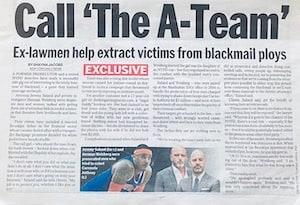

Domestic blackmail is serious enough. International sextortion often adds new layers of complexity that change the legal and tactical landscape. To that end, your messages threatening to call the police or the FBI will fall on deaf ears and could even embolden your blackmailer. The perpetrator(s) may be operating from another state or another country, using encrypted apps, temporary numbers, shell accounts, cryptocurrency wallets, remote access tools, or money mules. Images may be hosted on foreign platforms. Payment demands may move through multiple jurisdictions in hours. Even when the victim has compelling evidence, identifying the person who initiated the threat is not always the same as identifying the full group behind it. If it is not yet clear, your strategy needs to consider all of these realities and consider them all to be effective.
From the victim’s perspective, the immediate problem is not abstract jurisdiction. It is speed, but a tempo that you must dictate, not your victimizer. These cases often move at internet pace. A threat can escalate from flirtation or sharing a bit too much to blackmail in a single evening. A demand for money can become a threat to contact a spouse or employer, then a threat to publish material publicly. The extortionist may claim to have already prepared mass distribution lists, media drafts, or messages to human resources. Sometimes, the blackmailer will threaten to contact your online social network. Whether that claim is true or exaggerated, it is meant to force submission.
For a public facing professional, that pressure is uniquely dangerous. You may be worried not only about embarrassment, but about contracts, licenses, client confidence, campaign viability, institutional reporting duties, board scrutiny, and family fallout. A strategic response has to account for all of those exposures at once.
The first mistake many victims make is treating sextortion as a private embarrassment rather than a live legal crisis. The second mistake is overreacting. In a cross-border case, both extremes are harmful. Silence can allow the threat actor to seize control. Panic can destroy evidence or create admissions that complicate later defense, litigation, or reporting.
A disciplined legal response typically begins with containment. That may mean preserving chats, screenshots, account handles, user IDs, payment demands, wallet addresses, timestamps, email headers, platform URLs, and any records showing access to accounts or cloud storage. It may also mean changing passwords, locking down devices, enabling multi-factor authentication, reviewing account recovery settings, checking for unauthorized sessions, and separating trusted communications from compromised channels. Those technical steps are not cosmetic. They can prevent a sextortion scheme from turning into account takeover, business email compromise, or further reputational sabotage.
Just as important, containment requires message control. You should not be improvising explanations to family members, employers, colleagues, law enforcement, or platform moderators before counsel assesses the legal and practical consequences.The better course is a measured and targeted approach that preserves optionality while avoiding unnecessary publicity. Discretion is not the same thing as inaction. It is strategy. This is where Saland Law excels, and you benefit from experience and the right kind of advocacy.
Victims sometimes assume that an overseas offender is untouchable. That is not always true. In fact, Saland Law has proven otherwise and even put “boots on the ground” to knock on a sextorter’s door in the Philippines. For that matter, Jeremy has shut down blackmailers across Asia, Europe, Africa and elsewhere. Nonetheless, jurisdiction may be complex, but complexity is not immunity. Online threats that cross state or national boundaries can still trigger serious criminal exposure for the perpetrator, but that is routinely secondary because it is often a more difficult, delayed, and public route. Digital communications, payment trails, account records, platform data, and financial transactions can all become part of a broader investigation or legal strategy, but with a goal and end game that does not involve or engage law enforcement.
Again, the practical reality is that law enforcement timelines do not always match your urgency. A person whose name, business, marriage, or public profile is on the line may not be able to wait for a slow developing investigation to produce results. That is why Jeremy focuses on parallel action. Depending on the circumstances, that may include legal preservation demands, platform escalation, evidence packaging, strategic outreach, coordination with cybersecurity professionals, preparation for civil relief, and careful planning about when and how to engage authorities. Sometimes, however, the approach may be to simply hit your abuser where it really hurts: their bank accounts and the vehicles that enable them to profit from their criminality.
The point is not to bypass the law. It is to protect the client while using the law intelligently.You need a response that is legally sound but not performative. Quiet efficiency is not weakness. Don’t underestimate the power of grabbing their proverbial purse strings or putting them legally in fear that they won’t be making rent this month or putting food on their table.Your sextorter will learn, even if the hard way, something wicked this way comes. In these matters, it is often the only sensible and effective way forward.
A serious sextortion response is usually built around priorities. The first is stopping the bleeding, and that starts with seizing control and changing the power dynamic. That means reducing the extortionist’s access, leverage, and momentum. The second is preserving evidence in a form that can actually be used later. The third is understanding all the legal forums that may be affected. That doesn’t necessarily mean confronting your harasser with potential criminal charges or threats of civil actions. It means identifying who he or she is along with where the money is flowing. Not to be ignored, while all of these avenues are central to putting an end to your sextortion, identifying your workplace or licensing concerns, familial implications, and any collateral issue created by the underlying communications or images remain paramount. Remember, all of this is happening in real time as we do our best to keep the unfolding situation contained and private.
For some clients, the best strategy is aggressive but quiet. Let your harasser come to you. Let their words and aggression expose them along with the details you need to identify who they are or the financial institutions and apps they use as vehicles of their criminality. For others, it is quiet but visibly prepared to escalate. The strategy you implement will be one that you and Jeremy believe will provide you with the best opportunity to succeed, not one that merely feels good in the moment but compromises your immediate and long-term goals. An offender who senses panic may keep pushing. An offender who sees a well documented, coordinated, and legally informed response may make mistakes, abandon accounts, or limit dissemination. No lawyer can promise an extortionist will simply disappear, but a disciplined intervention can change the leverage dynamic dramatically.
It is also important to understand that these cases often involve more than one wrong. There may be extortion, unlawful dissemination of intimate images, stalking, impersonation, account intrusion, wire fraud, or laundering of proceeds. The law does not require the victim to reduce the event to a single label. A sophisticated legal analysis looks at the full pattern of conduct, and, again, one that can target their wallets more than their identities
Reputation is not vanity when your livelihood depends on trust, discretion, and credibility. A physician’s patient base, a lawyer’s client relationships, an executive’s board confidence, an athlete’s endorsements, a founder’s financing, an investment banker or private equity partner’s credibility, or a public official’s authority can all be damaged by a single malicious disclosure, even if the allegation is misleading or incomplete.
That is why counsel must think beyond the immediate threat message. Who could be contacted next? What relationships are most vulnerable? What if the offender reaches a spouse first, then an employer, then social media? What if the extortionist sends selected screenshots stripped of context? What if the material is fake, manipulated, or mixed with true facts to create a more persuasive lie? Cross-border offenders often understand that they do not need to win in court. They only need to create enough fear that the victim pays, complies, or collapses.
A well planned legal response addresses that reality head on. It prepares for publication risk without assuming publication is inevitable. It avoids needless admissions while preserving credibility. It treats the victim’s name, career, and family as assets worth protecting, because they are.
Timing matters in sextortion matters, especially when the offender is overseas or part of a ring. The sooner counsel and an advisor or advocate with deep knowledge and experience in these matters becomes involved, the easier it is to preserve complete evidence, avoid self-inflicted mistakes, and prevent the case from spreading into other areas of your life. Waiting often means lost metadata, deleted messages, corrupted device evidence, uninformed payments, and poorly framed communications that later become exhibits. Equally important, rash decisions, knee-jerk responses, or blocking all communications limits our ability to identify your stalker or his/her financial platforms that are key to shutting down your overseas sextorter.
Saland Law represents clients who do not want their crisis handled as a spectacle. They want a lawyer who understands criminal law, digital evidence, leverage, and human behavior under pressure. Again, it is incredibly unlikely law enforcement is coming to the rescue. Your responses and actions must be legal, but strategic and structured in a manner that is effective when the cavalry is not coming to save the day. Jeremy Saland’s experience as a former prosecutor informs the firm’s approach to coercion, extortion, threat assessment, and parallel risk management. Whether the threat comes from a catfish account, a former intimate partner, a coordinated ring abroad, or someone attempting to weaponize allegations, the response has to be grounded in facts and strategy, not panic.
If you are being threatened by someone demanding money, silence, sexual images, or continued sexual conduct under threat of exposure, you should treat the matter as a legal emergency even if you want it handled quietly. International sextortion rings count on fear, shame, and delay. They benefit when victims act alone, pay impulsively, or wait until the damage spreads.
Saland Law provides discreet, strategic representation for individuals facing extortion, coercion, online blackmail, and cross-border reputational threats. The goal is to keep matters private, protect your name and reputation, limit immediate and long-term consequences, and keep your life and family intact. The firm is based in New York City and led by Jeremy Saland, a former prosecutor and New York criminal defense lawyer who understands how these cases can escalate and how to respond with discipline.
When you need to seize control and take your life back, you cannot afford to make irresponsible decisions that you cannot unwind. A mistake today can haunt you far beyond tomorrow. When your life and future are on the precipice, there is no substitute for experience, knowledge and advocacy. Day or night, Jeremy Saland and Saland Law are at the ready.