Because There Is No
Substitute for Experience,
Knowledge & Advocacy
Substitute for Experience,
Knowledge & Advocacy







For lawyers with real-world experience “fixing” sextortion on Snapchat, there are some realities for victims of “sexting”, sugarbabies, affairs, and other intimate relationships and communications that have gone sideways on social media and direct messaging platforms. If nothing else, when you are a victim, it does not feel like an abstract cybercrime when it lands in your inbox. Instead, those messages that usually self-delete can be and often are weaponized in the most personal, humiliating, and dangerous ways. If you are a high net worth individual, an executive, physician, attorney, founder, athlete, entertainer, influencer, or any other public facing professional, or even a high school kid thinking he was speaking with a contemporary, the threat is often not simply about money. It is about leverage. It is about reputation. It is about panic. It is about controlling you before you have time to think clearly and molding you into what your exploiter and blackmailer wants you to be for him or her.
For obvious reasons, you, like everyone else targeted on Snapchat, are not looking for a dramatic public response. For that matter, you are not looking for a slow and plodding process that turns a private crisis into a spectacle, and one that decimates your family, career, and public persona. You want the account identified and preserved. You want communications handled strategically. You want the extortionist cut off from oxygen. Simply, what you want and need is to have the threat contained and your sextorter silenced within the four corners of the law even if neither one of you ever steps inside a courtroom. In fact, you likely don’t ever want to be within those walls. Above all, you want to protect your family, career, and name.
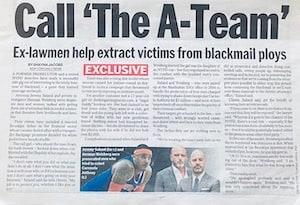
Having handled hundreds of matters involving sextortion, blackmail, stalking, and harassment, Saland Law approaches these matters with that urgency in mind, but always keeping your privacy, safety, and future at the forefront. Led by Jeremy Saland, a former prosecutor who learned the proverbial ropes of blackmail as the lead prosecutor in the extortion of a former NBA Allstar, the firm understands how digital evidence is preserved, how leverage works, how threats escalate, how to identify abusers and the financial accounts used to perpetrate their selfish frauds, and how to move decisively and discretely when someone is trying to force payment, extract more images, or weaponize private communications. For many victims no different than you,the priority is protecting themselves and their family, not making headlines. The priority is permanently ending the nightmare quickly, quietly, and intelligently.
Snapchat creates a particular kind of fear because so much of its brand identity is built around disappearing messages, anonymity, private exchanges, screenshots, and rapid communication. Victims often assume there is no way to regain control once an intimate image, recorded sexual contact, or compromising video has been sent. That fear is exactly what extortionists exploit.
Snapchat can be especially dangerous because it encourages fast, casual, and highly personal interaction. The platform’s culture is built around fleeting snaps, private chats, disappearing content, streaks, and a sense of informality that can cause people to lower their guard more quickly than they would on email, text, or even other social media platforms. That same design makes a target like you feel safer than they really are. You may believe that because a message disappears, the exchange is somehow less permanent, less traceable, or less risky, but you do not know know how that girl or woman on the other side, assuming it is not a man in the United States or abroad, is preserving those messages and infiltrating your social network. Sextortionists use that false sense of privacy to accelerate intimacy, obtain explicit images or video, and then weaponize the content once your guard is down and you are emotionally invested. It matters not if the communications began elsewhere such as on Seeking.Com, Tinder or Reddit. Snapchat is the vehicle for your sextorter to sink her, or, far too often, his, talons into your life.
The typical pattern is familiar. In some cases, the approach is framed around a supposed sugarbaby or sugardaddy relationship. Maybe it is sliding into your Snaps. Alternatively, the initial meeting began elsewhere, but Snap is used as a purported private and secret means to communicate. Regardless, the sextortionist may present the interaction as a discreet arrangement, financial companionship, mentorship with benefits, or an adult relationship between consenting people. Hey, what is the big deal about sending a few racy images and pictures anyway if it won’t come back to haunt you! That pitch is often designed to attract professionals, executives, physicians, lawyers, entrepreneurs, or other financially successful individuals, as well as teens and young adults, who may be especially sensitive to embarrassment, family fallout, or reputational harm.
Sometimes the setup is even more transactional. The scammer may imply that the interaction is “pay to play,” meaning money, gifts, or financial support are expected in exchange for attention, images, live sexual content, or an in person meeting. Whether the target is being lured through a fake arrangement, a sugar relationship pitch, a more direct pay to play proposition, or two younger people where one is posing as a woman or girl to lure a fellow teen’s “dick pick” in exchange for intimate images, the underlying tactic is the same. The sextortionist creates a scenario that feels private and consensual, then turns that scenario into fear and leverage.
The conversation moves fast. It becomes flirtatious, then sexual. Images are exchanged, or a live video session begins. In some cases, the person on the other end is using a stolen identity, a fake account, or a carefully curated catfish persona. In others, the account may look real enough to pass a quick glance because it includes regular snaps, a Bitmoji, mutual contacts, or location cues designed to lower your guard. Once the conversation becomes sexual, the scammer shifts from flirtation to coercion.
Then the tone changes.
You are told that your images will be sent to your spouse, family, employer, law partners, investors, patients, board members, congregants, campaign donors, social media followers, or the public unless you pay. Sometimes the demand is money. Sometimes it is more explicit content. Sometimes it is continued compliance. Sometimes it is all three. The extortionist may send screenshots of your LinkedIn profile, your company website, your Instagram contacts, or your family members to prove they have identified your real life. That’s when shit really gets real.
For a professional with a public profile, that shift is devastating. In a matter of minutes, a private mistake or private interaction becomes a reputational, career, and familial emergency.


Many victims make the mistake of thinking the crisis can be solved by paying once. Foolishly, they believe the lie, likely in part due to desperation. In reality, payment often confirms vulnerability and leads to more demands for even more money, whether by bitcoin, Zelle, Venmo, CashApp, Apple Pay or something else. If the extortionist believes you are frightened, liquid, image conscious, and desperate to avoid exposure because whatever they have on you, real or otherwise, will be used to squeeze you and increase pressure rather than end your victimization.
This matters especially for people with visible careers or personalities, as well as those who fear exposure to spouses and friends. A physician may fear licensing consequences or a position in a medical practice or at a hospital. A teacher may fear school scrutiny. A CEO may fear a revolt from a board. A politician may fear scandal. A lawyer may fear disciplinary inquiries or being fired from a firm. Even where the extortion itself is the central crime, the victim often worries that outsiders will not take time to understand the context. Why? Your embarrassment and infidelity in any form shames them. That in turn makes you expendable for damage control without ever having a fair shake to defend yourself.
Jeremy Saland, former prosecutor who led the investigation, indictment and conviction of multiple extorters of a then-NBA Allstar, understands that these fears are not irrational. In fact, they are quite real and often the reason victims delay getting help. But the longer the extortionist controls the pace, the harder it can become to contain the damage. That is why and when Saland Law steps in to seize control of your spiraling situation and to change the power dynamic.
Not every victim has the same risk profile. For some, a report to law enforcement may seem like the obvious first step, but the practical reality is that these investigations have miles of red tape when your abuser may be states or continents away and is given the runway to continue their sextortion. A public figure or high net worth professional, or someone who just has so much to lose like yourself, may need a more layered response because the harm is not limited to the dollars but far, far more.
There may be brand exposure, search engine implications, internal human resources concerns, media attention, relationship fallout, business partner anxiety, and the possibility that the extortionist will use partial truths, edited screenshots, or fabricated claims to create a more damaging story. Sometimes the threat is not merely, “Pay me or I send this image.” It is, “Pay me or I tell people you engaged in misconduct.” That accusation may invoke loaded language even if the extortionist is simply manufacturing pressure through lies, half truths, or distortions. In other words, you may already know that their gloves will come off and they are not afraid to throw a few punches to make sure you know they mean business.
That is one reason these matters benefit from counsel who sees both the legal and reputational dimensions. Jeremy Saland is a former prosecutor. He knows how digital allegations can spread, how evidence should be preserved, how to identify bad actors and the vehicles tied to their banks and accounts, and how to act before a bad situation becomes worse.
The first several hours after a Snapchat sextortion threat can be the most consequential. The sooner we are your voice, the better off you will be implementing a strategic plan and moving it forward. Panic leads people to make preventable mistakes. They send money. They beg. They argue. They threaten back. They delete evidence. They alert too many people. They risk publicity. They switch platforms without preserving the original communications. None of that puts you back in control. Don’t be that person. Don’t be a fool.
A disciplined first response and vetted strategy is always more valuable than a dramatic one, which is not a strategy at all.
That response usually begins with preserving everything. The account name, display name, Snapcode, chat history, screenshots, screen recordings, payment demands, payment handles, usernames on linked platforms, profile URLs, mutual contacts, timestamps, and any threats to distribute images should be secured immediately. If the extortionist sent screenshots showing your family members or colleagues, those should also be preserved. If they referenced your employer, firm bio, company website, or social media following, that context matters too.
Once evidence is preserved, the next move should be strategic, not emotional. Every communication can either reduce leverage or hand more leverage to the person targeting you.
Victims often assume that if they do not make noise, they are somehow giving up. That is not necessarily true. In Snapchat sextortion matters, quiet containment is the smarter move.
A measured response can involve preserving the evidence, reporting within the app should you need to go there, identifying linked accounts, assessing whether there has been unauthorized access to other platforms, locking down passwords, reviewing cloud storage exposure, and deciding whether direct communication with the extortionist helps or hurts. It can also include preparing for possible downstream issues before they occur. That might mean anticipating a fake email to your office, a fraudulent message to a spouse, or a fabricated outreach to an employer or school.
This is where Jeremy Saland’s role is especially valuable. He has done this and done so successfully to shut down and shut up sextortionists. The objective is not performative outrage. The objective is risk management under pressure.
Snapchat Specific Issues That Victims Overlook
One of the most dangerous assumptions is that disappearing messages means that they go away forever. They do not. Screenshots, secondary recording devices, mirrored displays, cached media, and linked accounts can preserve far more than a victim realizes. An image sent for a few seconds can still become a permanent extortion tool.
That is why victims should not waste time debating whether the other person “probably saved it.” You should proceed as though they did.
Snapchat accounts are often tied to broader digital footprints. The same handle may appear on Instagram, Telegram, Facebook, TikTok, Cash App, Venmo, Gmail, or dating platforms. Even when the profile itself is fake, linked artifacts can reveal patterns. This can matter for investigators, but it can also matter for immediate damage control. Similarly, preserving an associated account where you met your sextorter on sites like Reddit, Seeking Arrangements, or even on less known webpages is critical to allow future access, identify blackmailers, and, again, tie all the information together to best identify your victimizer and his or her financial information to shut them down.
Every case is different, but victims generally need more than generic advice. They need someone who can evaluate risk quickly and tailor the response to the real world stakes involved.
Jeremy Saland is one of a very few attorneys who have actually prosecuted high profile extortion crimes and helped dozens, if not hundreds, of clients victimized in extortion, revenge porn, blackmail, harassment, and stalking schemes. Jeremy has put “boots on the ground” in the Philippines, confronted sextorters throughout the United States and abroad, assessed threats in all forms, preserved digital records, identified targets and their financial platforms, unmasked “cloaked” blackmailers, and guided responses in ways that protected the financial,legal and reputational interests of countless clients. That may involve helping you avoid self damaging communications, preparing you for the possibility of outreach to third parties, and coordinating a response that is built around your status, profession, family circumstances, and tolerance for public exposure.
In some matters, the issue is immediate monetary extortion. In others, it is an attempt to force continued sexualized communications or obtain additional images. In still others, the extortionist is trying to parlay one interaction into a broader claim of misconduct, humiliation, or coercion. Jeremy can recognize the difference and respond accordingly.
For clients in public facing professions, discretion matters. So does speed. So does judgment.
A victim under pressure often believes there are only two choices. Pay or be exposed. That is a false choice.
The real question is what course of action reduces the extortionist’s leverage without creating unnecessary additional risk. Blind negotiation will fail because it is driven by fear rather than strategy. The extortionist controls the timeline, the victim says too much, and every message reveals more about what the victim is willing to do to keep the matter quiet. Stop asking “How high” when told to jump. In fact, stop jumping at all. It is their turn to workout their feeble leg muscles.
A more intelligent response starts with understanding the leverage structure and changing that power dynamic. Does the extortionist have your image only, or your broader network? Are they bluffing about your employer? Have they already contacted someone? Are they using a mass scam script or a personalized pressure campaign? Are there signs of account compromise beyond Snapchat? Is the threat focused on money, exposure, sexual humiliation, or false allegations? Make him or her chase you, not the other way around.
You cannot answer those questions well in panic mode. You answer them by slowing the situation down and securing the guidance you need.
Many victims are ashamed. That is fair, but don’t let it compromise asking for the help you need. There is no judgement from Jeremy and his team of seasoned investigators and former NYPD detectives, just as shame is not a strategy. Action is.
For a high visibility person, protecting your reputation does not mean pretending the threat is minor. It means addressing it intelligently before it spreads. It means limiting the audience, preserving the evidence, avoiding rash payments, locking down related accounts, and working with counsel who understands both the criminal and collateral consequences.
That is particularly important where a threatened disclosure could be spun into something broader than it really is. A private intimate exchange can be mischaracterized as predatory behavior. That risk can be even greater where the contact began through Snapchat and involved alleged sugarbaby, sugardaddy, or pay to play communications. Even when the interaction was fabricated, manipulated, or initiated by a scammer, those labels can be used to inflame the situation and create panic far beyond the underlying facts. A consensual conversation can be reframed with inflammatory words. A screenshot without context can be used to imply wrongdoing even when the extortionist is simply inventing a more explosive story to create panic. Once that kind of accusation starts moving, reputational cleanup becomes much harder than early containment.
If you are facing sextortion on Snapchat, you do not need a lecture. You do not need moral judgment. You do not need a one size fits all script pulled from a generic safety blog. You need a serious response calibrated to your real life.
Saland Law represents people who need a thoughtful, confidential, and forceful approach. Jeremy Saland’s background as a former prosecutor gives him a practical understanding of evidence, digital threats, escalation patterns, and how to address a crisis without feeding it. Jeremy’s practical and hands-on experience in this specific and sensitive area is the difference between success and failure. For many victims, the goal is simple even if the path is not. Stop the threat. Preserve the evidence. Protect the client. Avoid unnecessary public fallout and any fallout at all.
That is the work.
When Snapchat sextortion targets a public facing professional, every hour can matter. The right response is often not louder. It is smarter, faster, and more controlled. When you need nothing less than experience, advocacy, and knowledge as both your shield and sword, Jeremy Saland is your best weapon and defense to move your life forward.